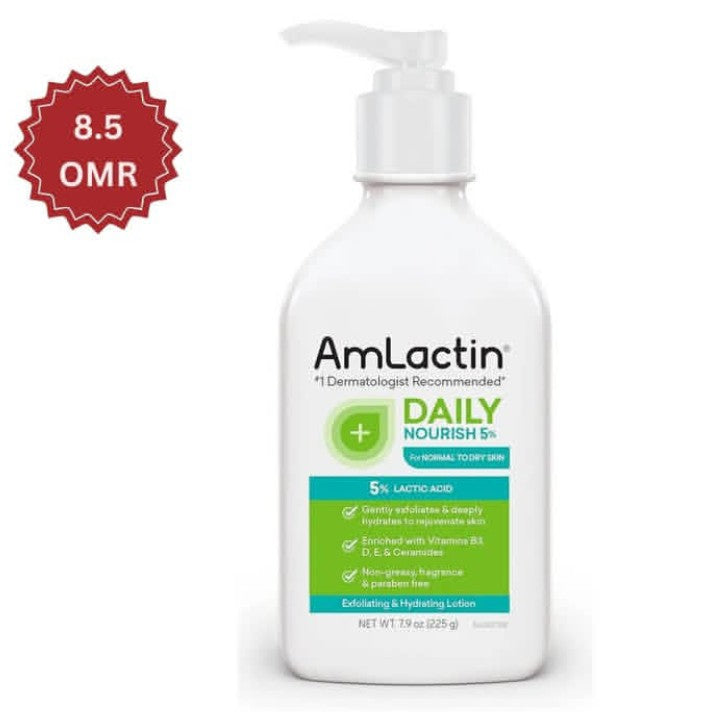
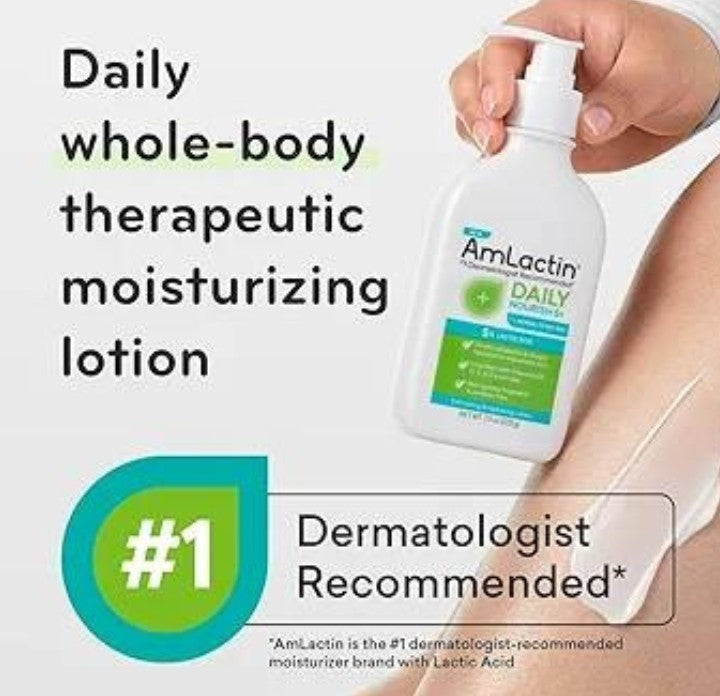
🌿 Enriched with 5% Lactic Acid, this dermatologist-recommended lotion exfoliates while deeply hydrating the skin.
Ideal for normal to dry skin, it helps improve texture and lock in moisture.
✨ Packed with Vitamins B3, D, E, and ceramides for healthier, smoother skin.
🚫 Non-greasy, fragrance-free, and paraben-free — perfect for daily use.
💚 Reveal radiant, nourished skin every day with this powerful yet gentle formula.
AmLactin 5% Lotion: Benefits & How to Use
Introduction to AmLactin 5% Lotion
AmLactin 5% Lotion is a popular search term among people looking for a body moisturizer that can do more than simply add moisture. Products containing lactic acid are commonly used to improve the feel and appearance of dry, rough, or uneven skin because lactic acid can provide both moisturizing and exfoliating benefits.
However, there is an important point to understand before buying or using any product under this name. AmLactin’s current official product range includes formulas such as Daily Nourish with 12% lactic acid and several 15% lactic acid treatments. The official brand website does not currently list a standard 5% lotion in its main product range.
That means shoppers should always check the bottle, ingredient list, concentration, and directions rather than relying only on a product title used by a retailer or search result.
For anyone specifically looking for a lower-strength lactic acid moisturizer, understanding how the ingredient works can help you choose an appropriate product and introduce it into your routine without unnecessarily irritating your skin.
What Is AmLactin 5% Lotion?
When people search for AmLactin 5% Lotion, they are generally looking for a gentler lactic acid body lotion that combines hydration with mild chemical exfoliation. Lactic acid belongs to a group of ingredients known as alpha hydroxy acids, or AHAs.
Unlike a physical scrub, an AHA lotion does not rely on rough particles to remove surface buildup. Instead, lactic acid helps loosen the bonds between dead skin cells, allowing them to shed more easily. This can gradually make rough skin feel smoother.
Lactic acid is also considered a humectant, meaning it can help support skin hydration. That combination makes lactic acid particularly interesting for people who want smoother body skin without using a separate exfoliating product and moisturizer.
The actual strength matters, though. A 5% lactic acid product would generally be considered a lower concentration than the 12% and 15% AmLactin formulas currently shown by the brand. Because formulas can change and product names can be inconsistent across retailers, checking the packaging is essential.
Key Benefits of a Lower-Strength Lactic Acid Lotion
The main reason people choose a lactic acid moisturizer is to address two common body-skin concerns at the same time: dryness and rough texture.
A well-formulated lower-strength lotion may help make dry skin feel softer while gently improving surface texture. This can be especially useful on areas such as the arms, legs, elbows, and knees, where skin often becomes rougher than the face.
Regular use may also make skin appear more polished and even because removing accumulated dead skin cells can improve the way light reflects from the skin surface.
Another advantage is convenience. Instead of applying a moisturizer and then using a separate exfoliant, a lactic acid body lotion can combine both steps in one routine.
That does not mean stronger is always better. A lower-strength formula may be more appropriate for someone who is new to chemical exfoliation or whose skin becomes irritated easily. The ideal strength depends on the formulation, skin sensitivity, application frequency, and other products being used.
How Lactic Acid Works on the Skin
Lactic acid is an AHA that works mainly at the surface of the skin. It helps loosen dead skin cells so they can be shed naturally. With consistent use, this process can improve the feel of rough areas.
It also has moisturizing properties, which is one reason lactic acid is often included in body-care products rather than being used only as an exfoliating treatment.
The result is different from what you might experience with a physical scrub. Scrubbing can temporarily make skin feel smooth, but excessive friction may irritate the skin barrier. A properly formulated chemical exfoliant works without the need for aggressive rubbing.
This is why application technique matters. A lactic acid lotion should be spread gently over clean skin instead of being vigorously massaged into the body.
How to Use AmLactin 5% Lotion
If you are using a product marketed as a 5% lactic acid lotion, begin by reading the exact directions on its packaging. The manufacturer's instructions should take priority because formulas can differ even when products have similar names.
For a new user, applying a small amount to a limited area first is a sensible way to see how the skin responds. If there is no significant irritation, the product can gradually be introduced into the normal body-care routine according to its directions.
Apply the lotion to clean, dry skin and spread a thin, even layer across the desired area. There is usually no benefit to applying a very thick layer. More product does not necessarily mean faster results and may increase the chance of irritation.
Avoid applying an exfoliating lotion to cuts, broken skin, freshly shaved irritated areas, or skin that is already inflamed. If burning, persistent redness, swelling, or significant discomfort develops, stop using the product.
For best results, consistency is more useful than overapplication. Skin texture generally improves gradually rather than overnight, so giving the routine enough time is important.
Best Areas to Apply a Lactic Acid Body Lotion
Lactic acid body products are commonly used on areas where dryness and rough texture are noticeable. The arms, legs, elbows, knees, and other dry body areas can benefit from a well-tolerated exfoliating moisturizer.
The backs of the upper arms are another area where people often look for products that improve rough or bumpy texture. However, not every bump is caused by simple dryness, so persistent or inflamed skin concerns should not automatically be treated as a cosmetic issue.
Feet and heels may also benefit from moisturizing ingredients, although very thick or severely cracked skin may require a different approach.
Facial skin deserves more caution. A body lotion may not have been formulated for the face, and products containing AHAs can cause irritation when used incorrectly. Always check whether the specific product is intended for facial application before using it there.
Who Can Use a Lower-Strength Lactic Acid Lotion?
A lower-strength lactic acid moisturizer may appeal to adults who want to improve dry or rough body skin while adding gentle exfoliation to their routine.
It can be particularly useful for people who find ordinary moisturizers insufficient for rough texture. Someone who is new to AHAs may also prefer starting with a milder formulation rather than immediately choosing a high-strength exfoliating product.
Still, skin tolerance varies from person to person. Someone with a damaged skin barrier, active irritation, or unusually sensitive skin may react even to a relatively mild exfoliating product.
People who are pregnant, breastfeeding, using prescription skin treatments, or managing a persistent skin condition should consider asking a healthcare professional whether an exfoliating acid product is appropriate for them.
Possible Side Effects and Precautions
Lactic acid can cause irritation, particularly when it is introduced too quickly or used alongside several other exfoliating products.
Mild tingling can occur with acid-based skincare, but strong burning is not something to push through. Persistent redness, itching, swelling, or discomfort is a reason to stop and reassess the product.
Another important consideration is sun exposure. AHAs can increase sensitivity to sunlight, so exposed skin should be protected with appropriate sunscreen and sensible sun-protection habits.
Avoid combining several strong exfoliating treatments on the same area unless you know your skin can tolerate the combination. For example, using multiple acids, aggressive scrubs, and other potentially irritating treatments at once can make it harder to identify what caused irritation.
A simple routine is often the better starting point. Use the exfoliating moisturizer as directed, allow your skin to adjust, and avoid chasing faster results by repeatedly increasing the amount.
AmLactin 5% Lotion vs. Stronger Formulas
The concentration of an AHA is one factor that influences how strong a product may feel, but it is not the only factor. The product's pH, overall formulation, application frequency, and other ingredients also affect how the skin responds.
This is important when comparing a supposed 5% product with AmLactin's current formulas. The official AmLactin website currently lists Daily Nourish Lotion with 12% lactic acid and several products containing 15% lactic acid.
Therefore, consumers should not assume that every product described online as “AmLactin 5%” is an official current AmLactin formula.
A lower-strength lactic acid lotion may make sense for someone who wants a more gradual introduction to exfoliation. A stronger formula may be intended for more intensive body-care concerns, but stronger does not automatically mean better for every skin type.
The right choice should be based on the condition of your skin, the manufacturer's instructions, and your tolerance for exfoliating ingredients.
How to Build It Into a Simple Body-Care Routine
A straightforward routine can make an exfoliating lotion easier to use consistently.
Start with a gentle body cleanser rather than a harsh scrub. After bathing, dry the skin without excessive rubbing. Apply the lactic acid moisturizer according to the product's instructions, focusing on areas that actually need it.
On days when your skin feels irritated or unusually dry, it may be better to simplify the routine rather than adding more exfoliating products.
During the daytime, remember sun protection for exposed areas. At night, the lotion can become part of a simple moisturizing routine if the product directions permit nighttime use.
The goal is not to create a complicated skincare schedule. The goal is to maintain healthy-looking, comfortable skin while gradually improving texture.
Common Mistakes to Avoid
One common mistake is assuming that using more lotion will produce faster results. Exfoliating ingredients work through regular use, not by applying excessive quantities.
Another mistake is combining too many active ingredients. Using an AHA lotion alongside several other exfoliants can increase irritation without necessarily improving results.
Applying the product immediately after shaving can also be uncomfortable because freshly shaved skin may be more sensitive. Waiting until the skin has settled can make the experience more comfortable.
It is also important not to judge the product after only one or two applications. Improvements in rough texture generally require consistent use over time.
Finally, never assume that a product is safe for every body area simply because it is marketed as a moisturizer. Always follow the label and avoid sensitive or damaged skin unless the product specifically instructs otherwise.
What Results Should You Expect?
Results vary depending on the condition of the skin and the formulation being used. Some people may notice that their skin feels softer relatively quickly, while visible improvements in rough texture can take longer.
A realistic expectation is gradual improvement rather than an overnight transformation.
If the main concern is simple dryness, hydration may be noticeable before changes in texture. If roughness is caused by a persistent skin condition, a cosmetic moisturizer may help the appearance or feel of the skin but may not address the underlying cause.
Consistency is therefore more important than applying the product aggressively. Give the routine enough time and pay attention to how your skin responds.
Frequently Asked Questions
Is AmLactin 5% Lotion officially available?
The current official AmLactin website lists products such as Daily Nourish Lotion with 12% lactic acid and multiple 15% lactic acid products. It does not currently show a standard 5% lotion in its main product lineup.
What does 5% lactic acid do for skin?
A 5% lactic acid formula would generally be considered a lower-strength AHA product designed to provide gentle surface exfoliation while supporting hydration. The exact effect depends on the complete formulation and how often it is used.
Can lactic acid lotion help rough skin?
Yes. Lactic acid can help loosen dead skin cells while also supporting moisture, which makes it useful in products designed for dry and rough body skin.
Can I use a lactic acid lotion every day?
Some formulas are designed for frequent use, but the correct schedule depends on the specific product. Follow its label directions and reduce frequency if irritation develops.
Can I use lactic acid lotion after shaving?
It is better to avoid applying an exfoliating acid immediately to freshly shaved or irritated skin because it may sting or cause additional irritation. Wait until the skin has settled.
Is lactic acid good for keratosis pilaris?
Lactic acid can help improve the rough texture associated with some cases of keratosis pilaris, but it does not cure the condition. Persistent or severe symptoms may require advice from a dermatologist.
Can I use it on my face?
Do not assume that a body lotion is suitable for facial skin. Check the specific product directions first. Facial skin can be more sensitive, and the formulation may not be designed for facial use.
Should I use sunscreen with lactic acid?
Yes. Because AHAs can increase sensitivity to sunlight, daily sun protection is an important part of a routine that uses exfoliating acids on exposed skin.
Final Thoughts
A lactic acid body lotion can be a useful option for people who want to combine moisturizing with gentle exfoliation. The key is choosing the correct formulation rather than relying only on a product name or percentage mentioned in an online listing.
For shoppers specifically searching for AmLactin 5% Lotion, checking the current packaging and official product information is especially important because the current AmLactin lineup prominently features 12% and 15% lactic acid formulas.
Used correctly, a suitable lactic acid moisturizer can become a simple part of a body-care routine focused on smoother, softer-looking skin. Start gradually, follow the product directions, protect exposed skin from the sun, and stop if significant irritation occurs.