✨ Reactivate Hair Follicles and Stimulate Real Hair Regrowth! ✨
Take control of hair loss and restore fuller, thicker hair with Men's Rogaine Extra Strength 5% Minoxidil Topical Solution. As the #1 dermatologist-recommended brand for hair regrowth, this clinically proven treatment targets hair thinning at the root by reactivating shrunken or inactive hair follicles on the scalp.
Formulated with 5% Minoxidil, this unscented topical solution penetrates deep into the scalp to boost follicle activity and protein production, encouraging healthy new hair growth. Designed for easy daily application, this 3-month supply includes three 60 mL bottles to help you maintain a consistent, effective routine for visible, long-lasting results.
Men's Rogaine 5% Minoxidil: Benefits & How to Use
Men's Rogaine 5% Minoxidil is a topical hair-loss treatment designed to help men with hereditary hair loss. Learn how it works, its potential benefits, proper application, expected results, possible side effects, and practical tips for getting the most from treatment.
What Is Men's Rogaine 5% Minoxidil?
Men's Rogaine 5% Minoxidil is a topical treatment used to help men manage hereditary hair loss, also known as male pattern hair loss. Its active ingredient, minoxidil, is applied directly to the scalp in an effort to support hair growth and slow further thinning.
Male pattern hair loss commonly develops gradually. Many men first notice a receding hairline, thinning around the crown, or an overall reduction in hair density. Because hair loss can progress over time, starting an appropriate treatment early may help preserve existing hair.
Rogaine is a well-known brand associated with minoxidil. The 5% strength is commonly marketed for men and is available in different formulations, including foam and topical solution. The product you choose should be used according to its specific label directions.
It is important to understand that minoxidil is not an instant solution for hair loss. Results generally take time, and continued use is usually necessary to maintain any improvement. If hair loss is sudden, patchy, painful, or accompanied by scalp inflammation, a healthcare professional should evaluate the underlying cause rather than assuming it is ordinary male pattern hair loss.
How Does 5% Minoxidil Work?
Minoxidil works locally on the scalp and is believed to influence the hair-growth cycle. Although its exact mechanism for treating hair loss is not completely understood, topical minoxidil can help support follicles and extend the active growth phase of the hair cycle.
Hair normally moves through several stages. During the anagen phase, hair actively grows. It then enters transitional and resting phases before shedding and beginning another cycle. In male pattern hair loss, genetically susceptible follicles can gradually become smaller, producing thinner and shorter hairs.
Using minoxidil consistently may help some affected follicles produce thicker, longer-lasting hairs. The response varies from person to person, so one man's results should not be used as a guarantee for another person's outcome.
Another important point is consistency. Applying the product occasionally is unlikely to provide the same opportunity for results as following the recommended treatment schedule. More product does not necessarily mean faster growth, so users should follow the instructions supplied with their specific formulation.
Benefits of Men's Rogaine 5% Minoxidil
One of the main reasons men consider 5% minoxidil is its potential to support hair regrowth in areas affected by hereditary thinning. It may help improve hair density and make some thinning areas appear fuller over time.
Another potential benefit is helping maintain existing hair. Hair-loss treatment is not always about producing dramatic new growth. Slowing the progression of thinning and supporting vulnerable follicles can also be valuable, particularly when treatment begins before substantial follicle miniaturization occurs.
The 5% concentration is widely used in men's hair-loss products and provides a practical topical option for people who want to address thinning without immediately pursuing procedural treatments. It can also be incorporated into a broader hair-care strategy when appropriate.
Results tend to be gradual. Some users may notice changes in shedding or early signs of regrowth before seeing a more noticeable improvement in overall density. Taking photographs under similar lighting and from similar angles can provide a more useful way to monitor progress than checking the mirror every day.
How to Use Men's Rogaine 5% Minoxidil
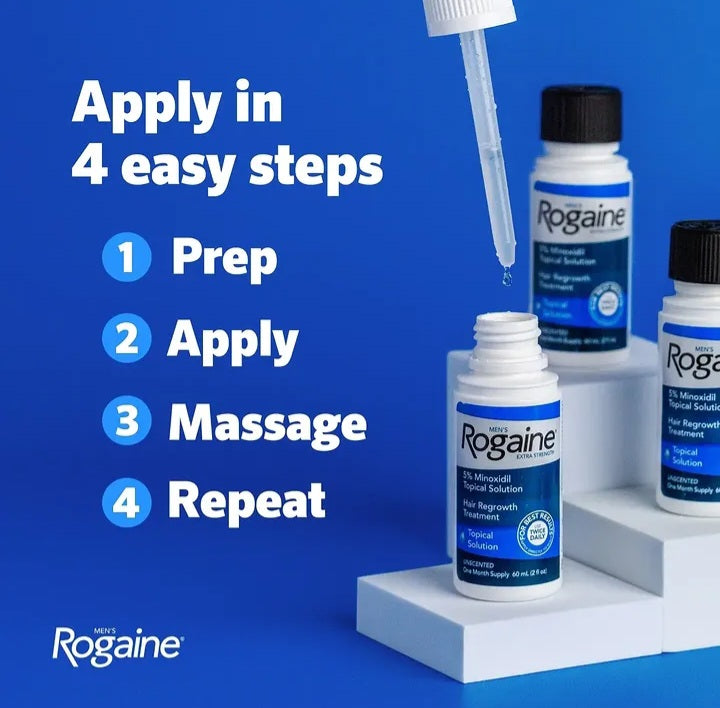
Correct application is important because the treatment is intended for the scalp rather than the hair itself. Before applying it, make sure the scalp is clean and dry unless the product instructions specifically state otherwise.
Part the hair so the thinning area is accessible, then apply the recommended amount directly to the affected scalp. Try to avoid unnecessarily spreading the product onto the hair because the goal is to reach the scalp and the follicles underneath.
After application, wash your hands thoroughly. Allow the product to remain on the scalp for the period specified on its label. Avoid getting it into the eyes, mouth, or other sensitive areas.
The exact frequency depends on the formulation and product directions. Do not increase the amount or frequency simply because you want faster results. Following the label is safer and more appropriate than experimenting with larger amounts.
Consistency is one of the most important parts of treatment. Missing an occasional application does not mean you should compensate by applying extra product later. Simply return to the recommended schedule.
If you use styling products, give the minoxidil time to dry according to the product directions before applying other products. Keeping your routine simple can also make it easier to stay consistent.
Who Should Use 5% Minoxidil?
5% minoxidil is primarily associated with men experiencing hereditary male pattern hair loss. It may be considered when thinning is developing gradually in recognizable areas such as the crown or top of the scalp.
However, not every type of hair loss is caused by male pattern baldness. Hair loss can also result from nutritional deficiencies, certain medications, hormonal changes, scalp disorders, stress-related shedding, or other medical conditions.
For that reason, men with unusual or unexplained hair loss should consider professional evaluation before relying on a topical treatment. Sudden hair loss, clearly defined bald patches, significant scalp irritation, or rapid changes deserve particular attention.
Age and individual circumstances also matter. Product labels may include specific age restrictions and warnings, so users should read the instructions for the exact product they have purchased.
Possible Side Effects
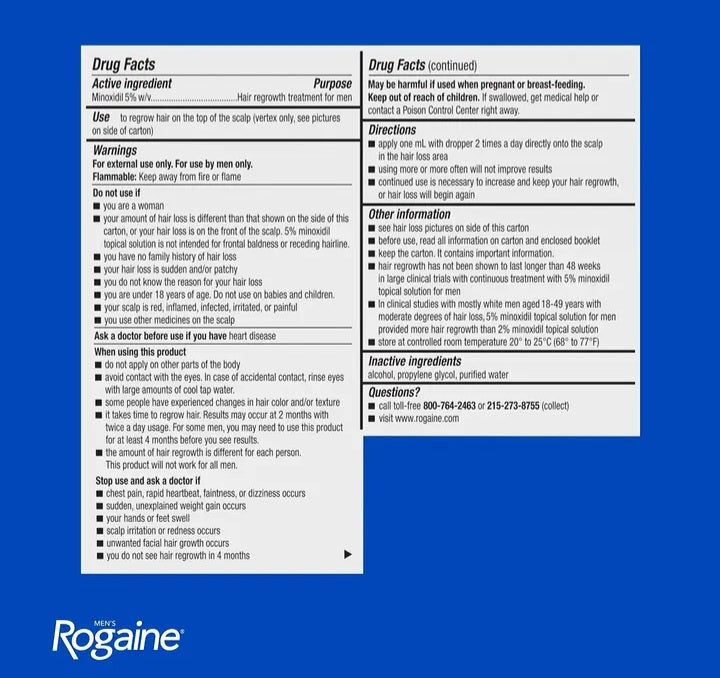
Like any active treatment, topical minoxidil can cause side effects. Some users experience scalp dryness, irritation, itching, redness, or flaking. These effects may vary depending on the formulation and individual sensitivity.
Some people may also notice increased shedding after beginning treatment. This can be concerning, but changes in shedding can occur as follicles move through different stages of the hair cycle. Persistent, severe, or unusual shedding should be discussed with a healthcare professional.
Unwanted hair growth can occur if the product spreads beyond the intended scalp area. Applying it carefully and washing your hands after use can help reduce unnecessary exposure.
More serious symptoms require prompt medical attention. If you experience chest pain, rapid heartbeat, fainting, severe dizziness, swelling, or other concerning symptoms, stop using the product and seek appropriate medical advice.
People with certain medical conditions or those taking particular medications should speak with a healthcare professional before starting treatment. Always read the product label and follow its warnings.
How Long Does Minoxidil Take to Work?
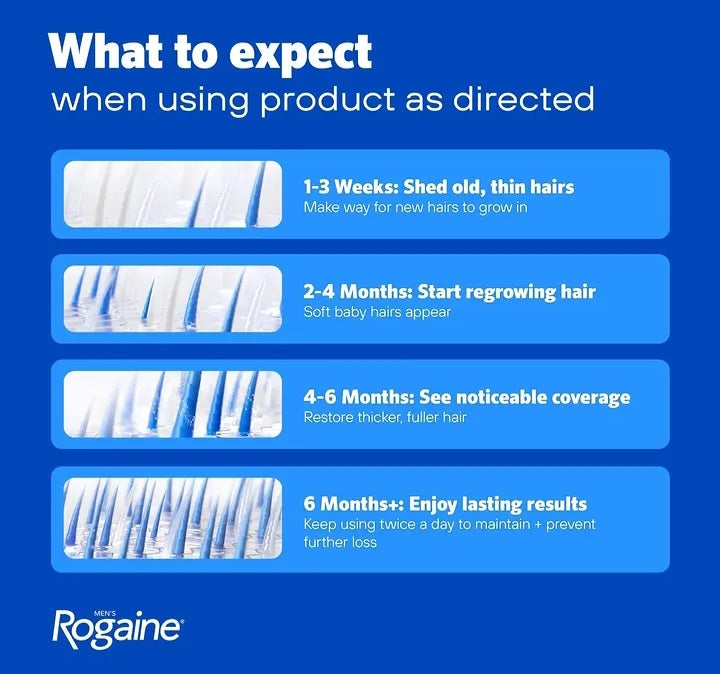
Patience is essential when using minoxidil. Hair grows slowly, and the treatment cannot produce overnight changes. Some people may notice early changes after several months, while more noticeable results can take longer.
The response depends on factors such as genetics, the extent of hair loss, age, treatment consistency, and how individual follicles respond to minoxidil. Someone with relatively recent thinning may respond differently from someone who has had extensive hair loss for many years.
It is useful to think of treatment as a long-term process rather than a short-term hair-growth challenge. Taking monthly photographs can help identify gradual changes that are difficult to notice from day to day.
If there is no improvement after an appropriate period of consistent use, or if hair loss continues rapidly, consult a healthcare professional. There may be another cause of the hair loss or another treatment approach worth considering.
Rogaine 5% Minoxidil vs. Other Hair Loss Treatments
Minoxidil is only one option for managing male pattern hair loss. Other approaches include prescription medications, low-level light-based devices, hair transplantation, scalp treatments, and cosmetic approaches that make thinning less noticeable.
Prescription treatments can work differently from topical minoxidil and may carry different benefits and risks. For example, some medications influence hormonal pathways associated with male pattern hair loss, so they should be discussed with a qualified healthcare professional.
Hair transplantation is different because it involves moving hair follicles from one area of the scalp to another. It may provide a more permanent redistribution of hair, but it is a surgical procedure and requires careful evaluation.
The right option depends on the cause and severity of hair loss, personal preferences, budget, risk tolerance, and treatment goals. A healthcare professional can help determine which approach makes sense for an individual situation.
Tips for Better Hair Growth Results
A consistent routine is more useful than constantly changing products. Give a treatment enough time to evaluate its response instead of switching between different products every few weeks.
Protect your scalp from unnecessary irritation and follow the instructions provided with your product. Avoid applying more than recommended because excess product does not guarantee faster results.
Nutrition also plays a role in overall hair health. A balanced diet that provides adequate protein, vitamins, minerals, and other essential nutrients supports normal body functions, including healthy hair production. However, taking supplements without identifying a deficiency is not necessarily helpful.
Gentle hair care can also reduce avoidable breakage. Excessive heat, harsh chemical treatments, aggressive brushing, and tight hairstyles can contribute to hair damage, although these factors are different from the follicle-level process involved in hereditary hair loss.
Managing expectations is equally important. The goal of treatment may be to maintain existing hair, improve density, encourage some regrowth, or slow visible progression. Not everyone will experience dramatic regrowth.
What Makes a Good Hair-Loss Treatment Routine?
A successful routine should be simple enough to maintain over the long term. Start by understanding the cause of your hair loss and selecting a treatment appropriate for that condition.
Next, follow the product directions carefully. Apply the recommended amount at the recommended frequency and avoid making changes based on assumptions that more product will produce better results.
Tracking progress can make the process more objective. Take photographs every few weeks or once a month using consistent lighting, distance, hairstyle, and camera angle. This provides a better comparison than relying on memory.
It is also useful to monitor your scalp. If irritation develops, do not simply ignore it. Review the product instructions and speak with a healthcare professional if symptoms persist or become severe.
Finally, remember that maintaining results generally requires continued treatment. Stopping minoxidil may cause the hair gained or maintained through treatment to gradually return toward its previous state over time.
Frequently Asked Questions
Is 5% minoxidil effective for men's hair loss?
5% topical minoxidil can help some men with hereditary male pattern hair loss by supporting hair growth and improving hair density. Individual responses vary, and treatment generally requires consistent use over time.
How often should men apply 5% minoxidil?
The appropriate application schedule depends on the exact product and formulation. Follow the instructions on the package rather than assuming every 5% minoxidil product should be used in exactly the same way.
Can minoxidil regrow a receding hairline?
Response around the hairline can vary. Minoxidil is generally used for areas affected by hereditary thinning, but it does not guarantee complete restoration of a receding hairline. Earlier treatment may offer a better opportunity to maintain vulnerable follicles.
Can I stop using minoxidil after my hair improves?
Stopping treatment can result in losing hair that was maintained or regrown with the help of minoxidil. Continued use is generally needed to maintain treatment-related benefits.
Does minoxidil cause initial shedding?
Some users may experience increased shedding after starting treatment. Because shedding can have several causes, persistent or severe changes should be discussed with a healthcare professional.
Can I use hair styling products with minoxidil?
Hair styling products may be compatible with treatment, but users should follow the instructions for their specific minoxidil product. Allowing the treatment to dry as directed before using other products can help maintain a practical routine.
Is 5% minoxidil suitable for everyone?
No. Minoxidil is intended for specific types of hair loss and may not be appropriate for every person. Men with sudden, patchy, unexplained, or inflamed scalp-related hair loss should seek professional advice.
What happens if I miss an application?
Do not automatically double the next application. Follow the product instructions and return to the normal recommended schedule.
Final Thoughts
Managing male pattern hair loss requires realistic expectations, consistency, and patience. A topical 5% minoxidil treatment can be a practical option for men who want to address hereditary thinning, but results differ from person to person.
The best approach is to identify the likely cause of hair loss, follow the product directions carefully, monitor changes over time, and seek professional advice when symptoms are unusual or treatment is not producing the expected response. A well-planned routine is more valuable than simply using more product.